Dashboard Warning Lights Explained: What Your Car Is Trying to Tell You?
Dashboard Warning Lights Explained: What Every Driver Should Know
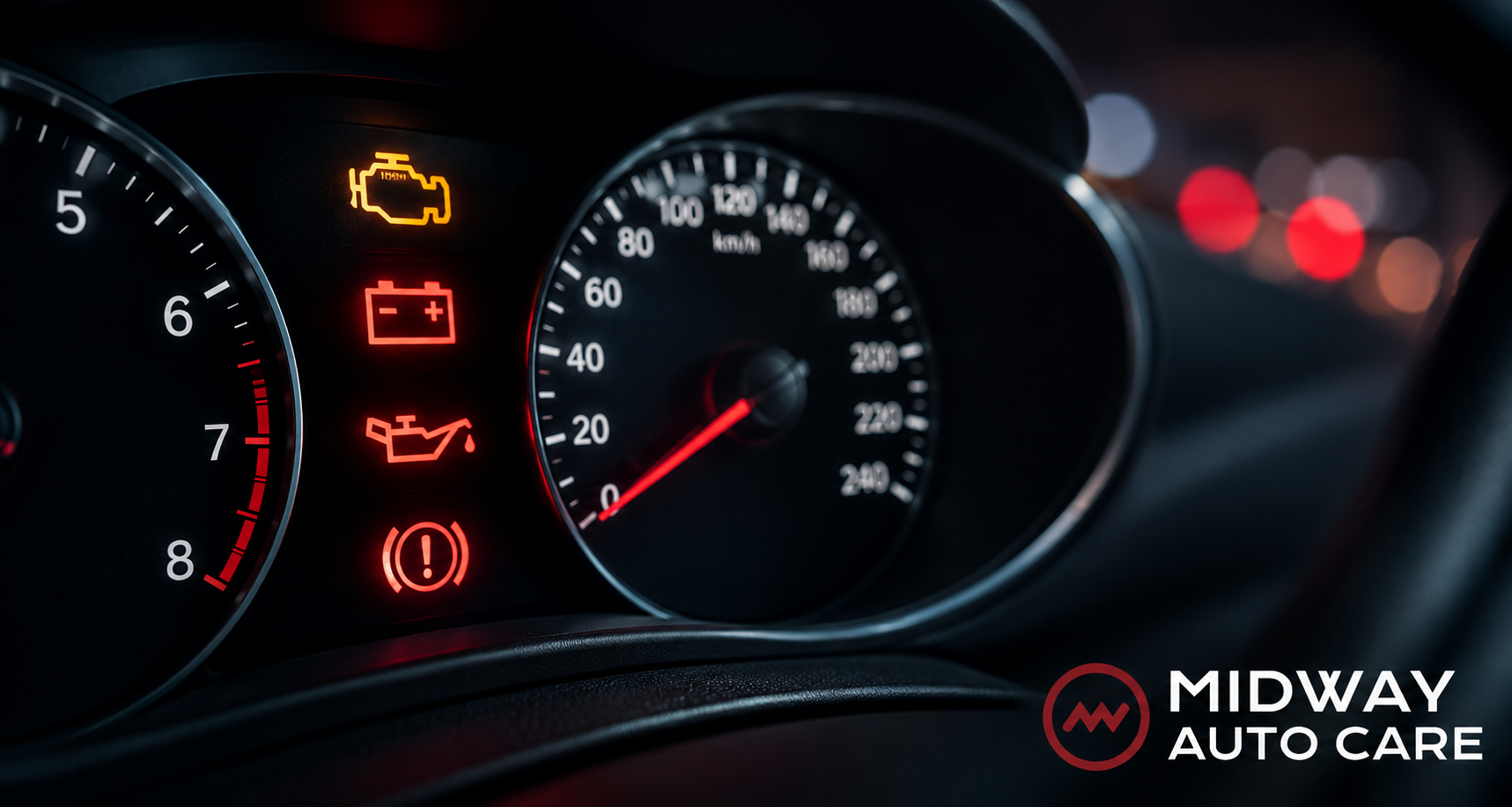
Dashboard warning lights are more than just random symbols—they are your vehicle’s way of telling you something needs attention. Understanding dashboard warning lights can help you prevent expensive repairs, avoid breakdowns, and stay safe on the road.
Some warning lights indicate minor service needs, while others signal urgent mechanical problems that require immediate action. Knowing the difference helps you respond quickly and confidently.
In this guide, we’ll explain the most common car warning lights, what they mean, and when you should stop driving and seek professional help.
Key Takeaways
- Dashboard warning lights provide important information about your vehicle’s health.
- Red warning lights usually require immediate action.
- Yellow or amber lights indicate warnings or service needs.
- Ignoring warning lights can lead to expensive repairs or unsafe driving.
- A professional diagnostic scan can identify the exact cause of many warning lights.
Most Common Dashboard Warning Lights
These are some of the most important dashboard warning lights every driver should know.
Check Engine Light
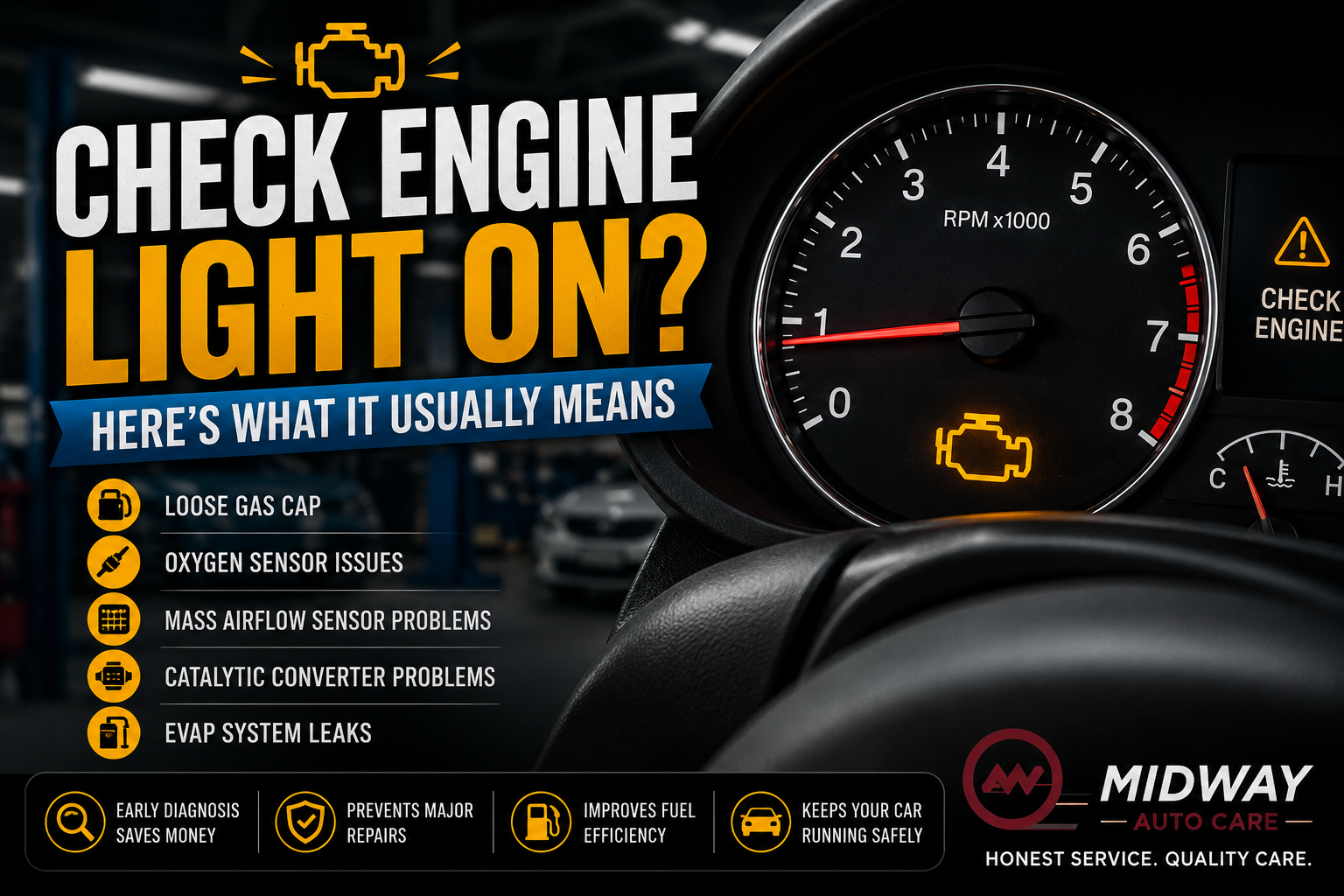
The check engine light can indicate anything from a loose gas cap to serious engine or emissions problems.
A steady light usually means the issue is not immediately dangerous, but it should still be checked soon.
A flashing check engine light is more serious and may indicate an engine misfire that could damage the catalytic converter. If this happens, reduce speed and seek service immediately.
Battery Warning Light
A battery-shaped warning light usually indicates a problem with the charging system.
Common causes include:
- Failing alternator
- Weak battery
- Loose battery connections
- Damaged charging cables
If ignored, your vehicle may eventually stall and fail to restart.
Oil Pressure Warning Light
This is one of the most serious warning lights.
Low oil pressure can cause severe engine damage within minutes.
If this light comes on:
- Pull over safely
- Turn off the engine immediately
- Check oil level after waiting
Never continue driving with the oil pressure light on.
Brake Warning Light
A brake warning light may indicate:
- Low brake fluid
- Worn brake pads
- Parking brake engaged
- Brake system malfunction
Because braking directly affects safety, this warning should never be ignored.
Tire Pressure Monitoring System (TPMS) Light
The TPMS warning light means one or more tires may be underinflated.
Driving with low tire pressure can cause:
- Poor handling
- Reduced fuel economy
- Uneven tire wear
- Increased blowout risk
Check tire pressure as soon as possible.
Engine Temperature Warning Light
This warning means your engine may be overheating.
Common causes include:
- Coolant leaks
- Failed thermostat
- Broken radiator fan
- Water pump failure
If the engine temperature warning light comes on, pull over immediately and allow the engine to cool.
ABS Warning Light
The ABS warning light indicates a problem with the anti-lock braking system.
Your brakes may still function normally, but emergency braking performance—especially on wet or slippery roads—may be reduced.
Understanding Dashboard Warning Light Colors
Dashboard light colors help indicate urgency.
Red | Immediate action required
Yellow / Amber | Warning or service needed soon
Green | System is active and functioning
Blue | High beams or coolant-related indicator
Flashing | Requires urgent attention
Understanding these colors helps you respond appropriately.
Can You Keep Driving With a Dashboard Warning Light On?
This depends on the warning light.
Usually Safe for Short Distances
You can often drive cautiously to a repair shop if you see:
- Steady check engine light
- TPMS warning light
- ABS warning light
Even then, service should not be delayed.
Stop Driving Immediately
Pull over as soon as safely possible if you see:
- Oil pressure warning light
- Engine overheating warning
- Brake failure warning
- Multiple warning lights appearing together
Continuing to drive may cause severe damage or create dangerous driving conditions.
What To Do When a Warning Light Appears?
Follow these steps:
1. Identify the Warning Light
Check the symbol and note its color.
2. Check Your Owner’s Manual
Your vehicle manual provides the exact meaning for dashboard symbols specific to your model.
3. Pay Attention to Vehicle Behavior
Ask yourself:
- Is the engine running rough?
- Do you hear unusual noises?
- Is there smoke or burning smell?
- Has performance changed?
These clues help narrow down the problem.
4. Decide Whether to Stop or Continue Carefully
If the issue appears urgent, stop immediately.
If not, schedule service as soon as possible.
Should You Use a DIY OBD-II Scanner?
DIY OBD-II scanners can help identify error codes stored in your vehicle’s computer.
Benefits include:
- Quick access to trouble codes
- Lower diagnostic cost
- Early problem detection
However, scanners have limitations.
A trouble code often identifies symptoms—not the root cause.
For example, an oxygen sensor code may actually be caused by:
- Vacuum leaks
- Wiring issues
- Fuel system problems
This is why professional diagnostics still matter.
Why Ignoring Warning Lights Can Become Expensive?
Many major repairs begin with small warning signs.
Ignoring a warning light can lead to:
- Catalytic converter damage
- Engine overheating
- Battery failure
- Brake system damage
- Electrical problems
What starts as a simple sensor issue can become a major repair bill if ignored for too long.
Final Thoughts
Understanding dashboard warning lights meaning gives you an important advantage as a driver.
These warning lights are designed to protect both your vehicle and your safety. Some alerts allow time for diagnosis, while others demand immediate action.
The key is simple: don’t ignore warning lights.
Respond early, diagnose the issue properly, and prevent minor problems from becoming expensive repairs.
Need a Diagnostic Scan?
If a dashboard warning light stays on or keeps coming back, a professional diagnostic scan can identify the exact issue before it leads to bigger repairs.
At Midway Auto Care, we help drivers quickly diagnose warning lights and identify the right repair solution.
📞 Call Midway Auto Care at (708) 294-8297
📍 Proudly serving Summit, IL and surrounding Chicago communities.
Frequently Asked Questions
What does a red battery warning light mean?
It usually indicates a problem with your charging system, often involving the battery or alternator.
Can I drive with the check engine light on?
A steady light usually allows short-distance driving, but a flashing light requires immediate attention.
What does the oil pressure warning light mean?
It indicates dangerously low oil pressure that can cause severe engine damage.
Why is my tire pressure warning light on?
One or more tires may be underinflated, which affects safety and fuel efficiency.
What is the most serious dashboard warning light?
Oil pressure, brake system, and engine temperature warning lights are among the most critical because they can indicate immediate danger.