By Ramy Elkherbawy
•
July 8, 2026
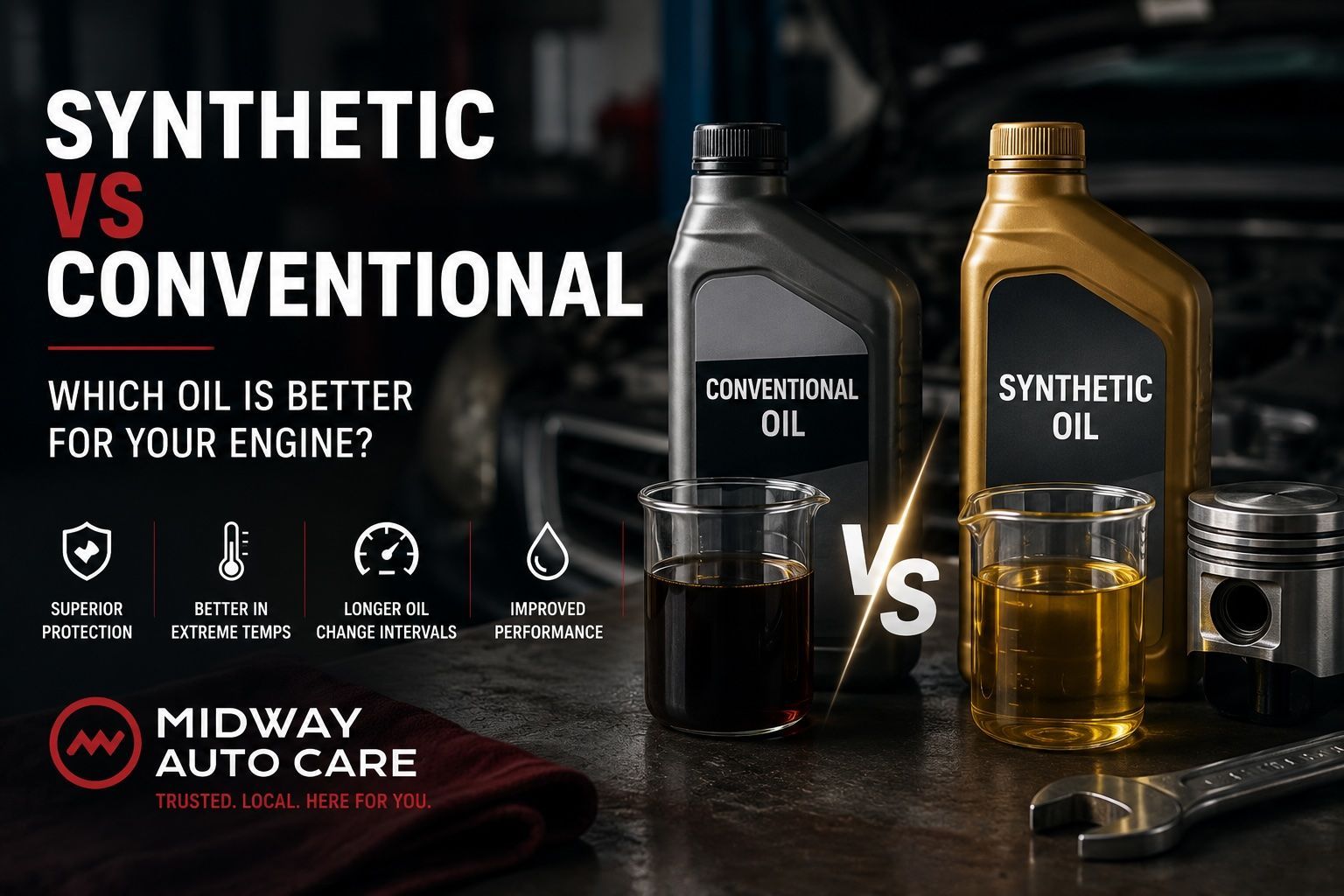
Synthetic vs Conventional Oil Oil choice directly impacts your engine’s performance and lifespan. You face a decision every time you refill: conventional or synthetic. While both lubricate, their chemical structures and performance under stress differ significantly. A mid-sized SaaS firm might prioritize server uptime, but you prioritize engine reliability, and the oil you select plays a defining role in that outcome. Key Takeaways: Synthetic oil is engineered from chemically modified petroleum components rather than refined directly from crude, allowing for more uniform molecular structure and fewer impurities compared to conventional oil. In high-temperature environments, such as towing or stop-and-go city driving, synthetic oil maintains viscosity more effectively, reducing the risk of oil breakdown and sludge formation. Engines operating in subzero climates benefit from synthetic oil’s lower pour point, enabling faster lubrication at startup and reducing wear during cold starts. Extended oil change intervals are possible with full synthetics, with some manufacturers recommending changes only after 10,000 to 15,000 miles under normal driving conditions. High-performance and turbocharged engines, like those in many German automotive brands, often require synthetic oil to meet factory specifications and maintain warranty coverage. While synthetic oil costs more per quart, the longer service life and potential fuel economy improvements can result in lower total cost of ownership over time for a mid-sized SaaS firm’s vehicle fleet. Some conventional oils now include synthetic blends to offer a middle ground in performance and price, though they do not match the thermal stability of full synthetic formulations. Fundamental Chemical Composition Synthetic and conventional oils differ primarily in the uniformity and purity of their molecular structures. Conventional oils derive from crude oil with complex, irregular hydrocarbon chains, while synthetics are built from carefully engineered molecules designed for consistency. This foundational difference directly influences thermal stability, viscosity control, and resistance to oxidation under stress. Refinement Processes for Conventional Base Stocks Conventional base oils undergo physical separation and chemical treatment of crude oil through processes like solvent extraction and dewaxing. These steps improve stability and flow but cannot eliminate all impurities or inconsistent molecular forms. Residual sulfur, nitrogen, and aromatic compounds remain, limiting performance potential compared to more precise manufacturing methods. Molecular Engineering of Synthetic Lubricants Synthetic base stocks such as polyalphaolefins (PAO) and esters are chemically synthesized to achieve uniform molecular size and structure. This precision enhances film strength and reduces volatility. You benefit from more predictable behavior across temperature extremes and longer fluid life due to reduced breakdown. Manufacturers build synthetic molecules from smaller precursors, allowing exact control over branching and chain length. For example, a mid-sized SaaS firm might not grasp the chemistry, but in practice, this means fewer byproducts during operation and less sludge formation. The result is a lubricant that maintains integrity over extended drain intervals and delivers consistent protection in high-stress environments. Performance in Extreme Operating Conditions Synthetic oils maintain stability under severe stress, outperforming conventional oils in both subzero cold and sustained high-heat environments. Their uniform molecular structure resists volatility, ensuring consistent lubrication when engines face extreme demands, such as towing or track use. Low-Temperature Pumpability and Cold Starts Synthetic oils flow more readily at low temperatures, reducing the time it takes for oil to reach critical engine components during startup. This faster circulation minimizes dry friction, a leading cause of wear in colder climates. Property Comparison Viscosity at -30°C Synthetic: Remains fluid; Conventional: May thicken significantly Startup protection Synthetic: Near-instant flow; Conventional: Delayed circulation Resistance to Thermal Breakdown and Oxidation Synthetic oils resist oxidation better than conventional oils, reducing sludge and deposit formation during prolonged exposure to high engine temperatures, especially in turbocharged or performance vehicles operating under continuous load. Oxidation occurs when oil reacts with oxygen under heat, accelerating degradation. A mid-sized SaaS firm running a fleet of turbocharged sedans observed fewer intake valve deposits after switching to full synthetics, with oil analysis showing lower levels of acid byproducts after 15,000-mile intervals. Engine Longevity and Wear Protection Synthetic oil’s uniform molecular structure provides superior protection against engine wear, especially during cold starts and high-load operation. You benefit from reduced friction between moving parts, which translates to less metal-to-metal contact over time. Long-term use of synthetic formulations has been linked to extended engine service life, particularly in turbocharged and high-performance engines where heat and stress are more intense. Mitigation of Sludge and Varnish Deposits Synthetic oils resist thermal breakdown better than conventional oils, significantly reducing the formation of sludge and varnish. You experience cleaner engine internals, even under prolonged high-temperature operation. This resistance helps maintain consistent oil flow and protects critical components like piston rings and oil galleries from deposit-related blockages. Shear Stability and Film Strength Maintenance Synthetic oils maintain their viscosity under high mechanical stress, ensuring stable lubrication in demanding conditions. You rely on consistent film strength to protect bearings and camshafts, especially in engines with tight tolerances. Unlike conventional oils, synthetics resist thinning when exposed to sustained shear forces. Shear stability refers to an oil’s ability to resist permanent viscosity loss when subjected to mechanical shearing, such as that occurring in gear meshes or hydraulic lifters. You depend on synthetic base stocks like PAO and esters, which inherently resist breakdown under shear, preserving the oil’s protective qualities over extended drain intervals. A mid-sized SaaS firm running fleet vehicles in stop-and-go conditions observed fewer oil-related maintenance issues after switching to full synthetic, particularly in engines with variable valve timing systems sensitive to oil degradation. Economic Analysis and Value Proposition Synthetic oil commands a higher initial price, often costing two to three times more than conventional options. Despite this, its extended drain intervals and enhanced engine protection can reduce long-term maintenance expenses. For drivers prioritizing durability and performance, the investment often justifies itself over time through fewer oil changes and lower risk of costly repairs. Upfront Maintenance Costs vs. Long-Term Reliability You pay more at the pump with synthetic oil, but that premium buys longer service life and better component protection. A mid-sized SaaS firm’s fleet vehicles, for example, cut annual maintenance downtime by switching to full synthetics, extending intervals from 5,000 to 10,000 miles without compromising engine health. Evaluating Synthetic Blends as a Middle Ground Synthetic blends offer a balanced compromise, mixing refined conventional base oils with synthetic additives to improve thermal stability and flow characteristics. You gain some performance benefits of full synthetics at a more accessible price point, making them suitable for moderate driving conditions and older engines not requiring premium formulations. Blends typically contain 20% to 40% synthetic components, enhancing oxidation resistance over conventional oils without the full cost. You might choose a blend if you live in a region with seasonal temperature swings and want improved cold-start performance without committing to full synthetic. Some manufacturers even recommend blends for newer vehicles during break-in periods before transitioning to full synthetic. Summing up You choose synthetic oil for its engineered consistency and superior performance under stress, especially in extreme temperatures or high-load applications. Conventional oil, while sufficient for basic needs, lacks the refined purity and additive stability of synthetics. Your decision hinges on engine type, driving conditions, and long-term maintenance goals. A high-mileage sedan in stop-and-go traffic benefits more from synthetic than a low-use weekend cruiser. Original equipment manufacturers increasingly specify synthetic oils in modern engines, reflecting their confidence in extended protection and efficiency. Your owner’s manual provides the definitive guidance for your specific vehicle. FAQ Q: What is the primary chemical difference between synthetic and conventional motor oil? A: Synthetic oil is engineered from chemically modified petroleum components or synthesized compounds, often using polyalphaolefins (PAO) or esters to achieve uniform molecular structure. Conventional oil, by contrast, is refined directly from crude oil with minimal chemical alteration, leaving a less consistent molecular profile. This foundational difference affects nearly every performance aspect, from viscosity stability to resistance against thermal breakdown. Q: Does synthetic oil improve fuel economy compared to conventional oil? A: In many cases, synthetic oil can contribute to improved fuel efficiency due to its lower internal friction and consistent flow characteristics at low temperatures. For example, a mid-sized SaaS firm operating a fleet of delivery vans reported a measurable improvement in average miles per gallon after switching to full synthetic oil, particularly in stop-and-go urban routes. The smoother molecular uniformity reduces drag on moving engine parts, allowing the engine to operate with slightly less effort. Q: How often should synthetic oil be changed compared to conventional oil? A: While conventional oil typically requires changes every 3,000 to 5,000 miles, synthetic oil can often last 7,500 to 15,000 miles depending on formulation and driving conditions. Some manufacturers, such as BMW and General Motors, specifically design certain engines to run on synthetic oil with extended drain intervals up to 15,000 miles. Always follow the vehicle manufacturer’s recommended service schedule, as exceeding it without proper oil analysis can risk engine damage. Q: Is synthetic oil necessary for modern engines? A: Many new vehicles, especially those with turbocharged engines or direct fuel injection, require synthetic oil by factory specification. The tighter tolerances and higher operating temperatures in these powertrains demand superior thermal stability and sludge resistance. For instance, the Ford EcoBoost engine family is designed exclusively for synthetic oil use, and using conventional oil may void certain warranty coverages related to engine wear or deposits. Q: Can switching between synthetic and conventional oil harm an engine? A: Switching between oil types does not inherently damage an engine, provided the oil meets the required API specifications and viscosity grade. Modern engine seals and internal components are compatible with both types. A long-haul trucker operating a 2018 Freightliner Cascadia successfully transitioned from conventional to synthetic oil without mechanical issues, noting improved cold-start performance and reduced oil consumption over time. Q: Does synthetic oil reduce engine deposits more effectively than conventional oil? A: Yes, synthetic oil resists oxidation and thermal breakdown more effectively, which directly limits the formation of sludge and varnish. In independent engine teardown analyses, vehicles using conventional oil for extended periods showed noticeably higher levels of internal deposits, especially around piston rings and valve covers. Synthetic formulations typically include more advanced additive packages that remain effective longer under high-stress conditions. Q: Is synthetic oil worth the higher upfront cost? A: For most drivers, the extended drain intervals, improved engine protection, and potential fuel savings offset the higher initial price of synthetic oil. A family sedan driven 12,000 miles annually might spend about $200 more per year on synthetic oil and fewer changes, but could avoid costly repairs related to sludge buildup or premature wear. Over a ten-year ownership period, the total cost of ownership often favors synthetic, particularly in vehicles driven in extreme temperatures or heavy loads.