Is It Worth Repairing an Older Vehicle or Buying a New One?

Ramy Elkherbawy • June 5, 2026
Is It Worth Repairing an Older Vehicle or Buying a New One?

With rising vehicle prices and longer ownership trends, many drivers are asking the same question:

Is it worth repairing an older vehicle, or is it time to replace it?

The answer depends on several factors, including repair costs, vehicle reliability, safety, fuel efficiency, and your long-term transportation needs.

In many cases, repairing an older vehicle can be far more affordable than taking on a new car payment. However, some repairs may signal that your vehicle has reached the point where replacement becomes the smarter financial decision.


Key Takeaways

  • Repair costs should be compared to the vehicle’s current market value.
  • Reliable older vehicles can often provide many additional years of service.
  • Major engine or transmission failures may indicate it’s time to consider replacement.
  • Regular maintenance can help vehicles exceed 200,000 miles.
  • Keeping a vehicle on the road can reduce environmental impact compared to manufacturing a new one.


Evaluating Your Vehicle’s Mechanical Condition

The first step in deciding whether to repair or replace a vehicle is understanding its overall mechanical health.


Condition of the Engine and Transmission

Your engine and transmission are the most important and expensive systems in your vehicle.

If your engine runs smoothly, the transmission shifts properly, and there are no major leaks or performance issues, your vehicle may still have many years of useful life remaining.

Routine repairs such as brakes, suspension work, sensors, alternators, batteries, and cooling system components are often worth the investment when the powertrain remains healthy.


Major Mechanical Failures

Certain problems can dramatically change the equation.

These include:

  • Engine failure
  • Transmission failure
  • Severe frame rust
  • Structural damage
  • Repeated overheating issues
  • Extensive electrical system failures

If repair costs approach or exceed 50% of your vehicle’s market value, replacement may be the more economical choice.


The Cost of Repair vs. The Cost of Replacement

Many drivers focus only on repair costs without considering the full cost of replacing a vehicle.

A newer vehicle often comes with:

  • Monthly payments
  • Higher insurance premiums
  • Registration fees
  • Depreciation

An older vehicle that is paid off may still be the more affordable option, even if occasional repairs are required.

For example, a $1,500 repair may seem expensive, but it is often far less costly than taking on a $500 monthly car payment.


Safety and Technology Considerations

Modern vehicles offer safety features that older vehicles may not have.


Advanced Driver Assistance Systems

Newer vehicles often include:

  • Automatic Emergency Braking
  • Blind Spot Monitoring
  • Lane Departure Warning
  • Adaptive Cruise Control
  • Rear Cross Traffic Alert

If safety is a major concern for your family, upgrading to a newer vehicle may be worth considering.


Improved Fuel Economy

Fuel efficiency has improved significantly over the last decade.

Modern vehicles use advanced engine technology, lightweight materials, and improved aerodynamics to reduce fuel consumption.

If you drive long distances every day, fuel savings may help offset the cost of upgrading.


When Repairs Start Becoming Too Frequent

One of the biggest warning signs is increasing repair frequency.

Ask yourself:

  • Am I visiting the repair shop every few weeks?
  • Do I trust this vehicle for long trips?
  • Am I constantly dealing with warning lights?
  • Are repair costs increasing every year?

When reliability becomes unpredictable, the financial and emotional cost of ownership can outweigh the benefits of keeping the vehicle.


Parts Availability Matters

As vehicles age, replacement parts can become harder to find.

Some discontinued models require:

  • Used components
  • Aftermarket alternatives
  • Specialty suppliers

This can increase both repair costs and repair times.

Popular vehicles such as Toyota, Honda, Ford, Chevrolet, and Subaru often remain economical to repair because parts are widely available.


Is a High-Mileage Vehicle Worth Repairing?

Mileage alone should not determine whether a vehicle is worth repairing.

Many properly maintained vehicles routinely exceed:

  • 200,000 miles
  • 250,000 miles
  • 300,000 miles

A well-maintained vehicle with 200,000 miles may be a better investment than a neglected vehicle with only 100,000 miles.

Maintenance history is often more important than mileage.


At What Point Is a Car Not Worth Repairing?

You may want to consider replacing your vehicle if:

  • Repair costs exceed 50% of vehicle value
  • The engine or transmission has failed
  • Structural rust affects safety
  • Multiple major systems are failing simultaneously
  • Parts are difficult or expensive to obtain

In these situations, purchasing another vehicle may provide better long-term value.


Repair or Replace: Which Option Saves More Money?

For many drivers, repairing an older vehicle remains the most cost-effective choice.

If your vehicle is generally reliable and repairs are predictable, keeping it on the road can save thousands of dollars compared to purchasing a newer vehicle.

The key is understanding the vehicle’s overall condition before making a decision.


Not Sure Whether to Repair or Replace Your Vehicle?

Every vehicle is different.

At Midway Auto Care, we help drivers make informed decisions based on repair costs, vehicle condition, reliability, safety, and long-term value.

Our experienced technicians can inspect your vehicle and provide honest recommendations so you can determine whether repairing your current vehicle makes financial sense.

📞 Call Midway Auto Care today at (708) 294-8297 to schedule a vehicle inspection.

📍 Proudly serving Summit, IL and surrounding Chicago communities.

Like our Facebook Page


Frequently Asked Questions


Is it worth repairing a vehicle with over 200,000 miles?

Yes. Many vehicles exceed 200,000 miles when properly maintained. The overall condition and maintenance history matter more than mileage alone.


How much should I spend repairing an older vehicle?

A common guideline is to avoid repairs that exceed 50% of the vehicle’s market value unless the vehicle has exceptional reliability or sentimental value.


Is it cheaper to repair a car or buy another one?

In many situations, repairing an existing vehicle is less expensive than purchasing another vehicle and taking on monthly payments, taxes, and higher insurance costs.


What repairs are usually not worth fixing?

Major engine failures, transmission replacements, severe frame rust, and multiple simultaneous system failures often indicate that replacement should be considered.


Should I repair or replace my vehicle?

The answer depends on repair costs, reliability, safety, and your long-term goals. A professional inspection can help determine which option offers the best value.
By Ramy Elkherbawy May 29, 2026
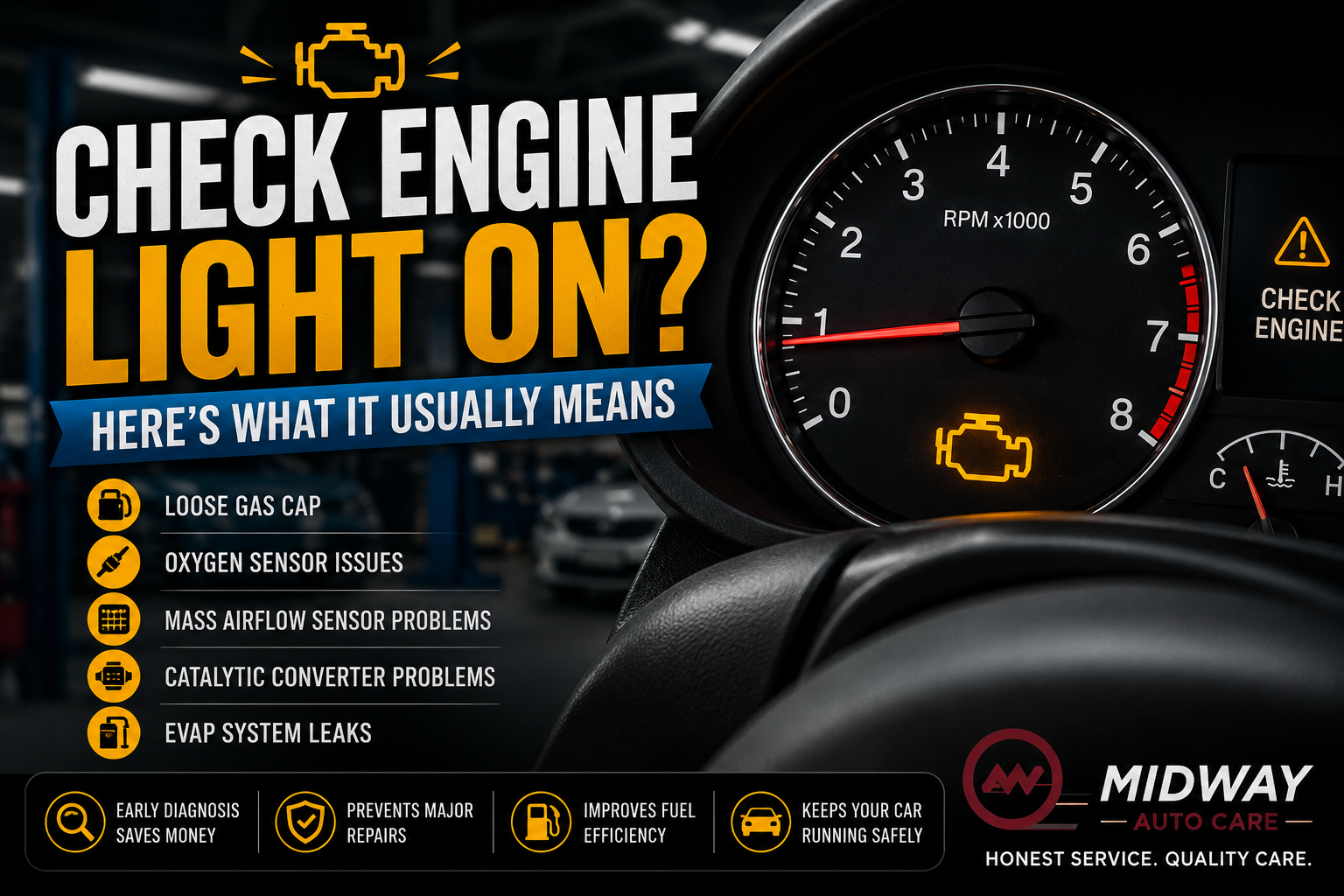
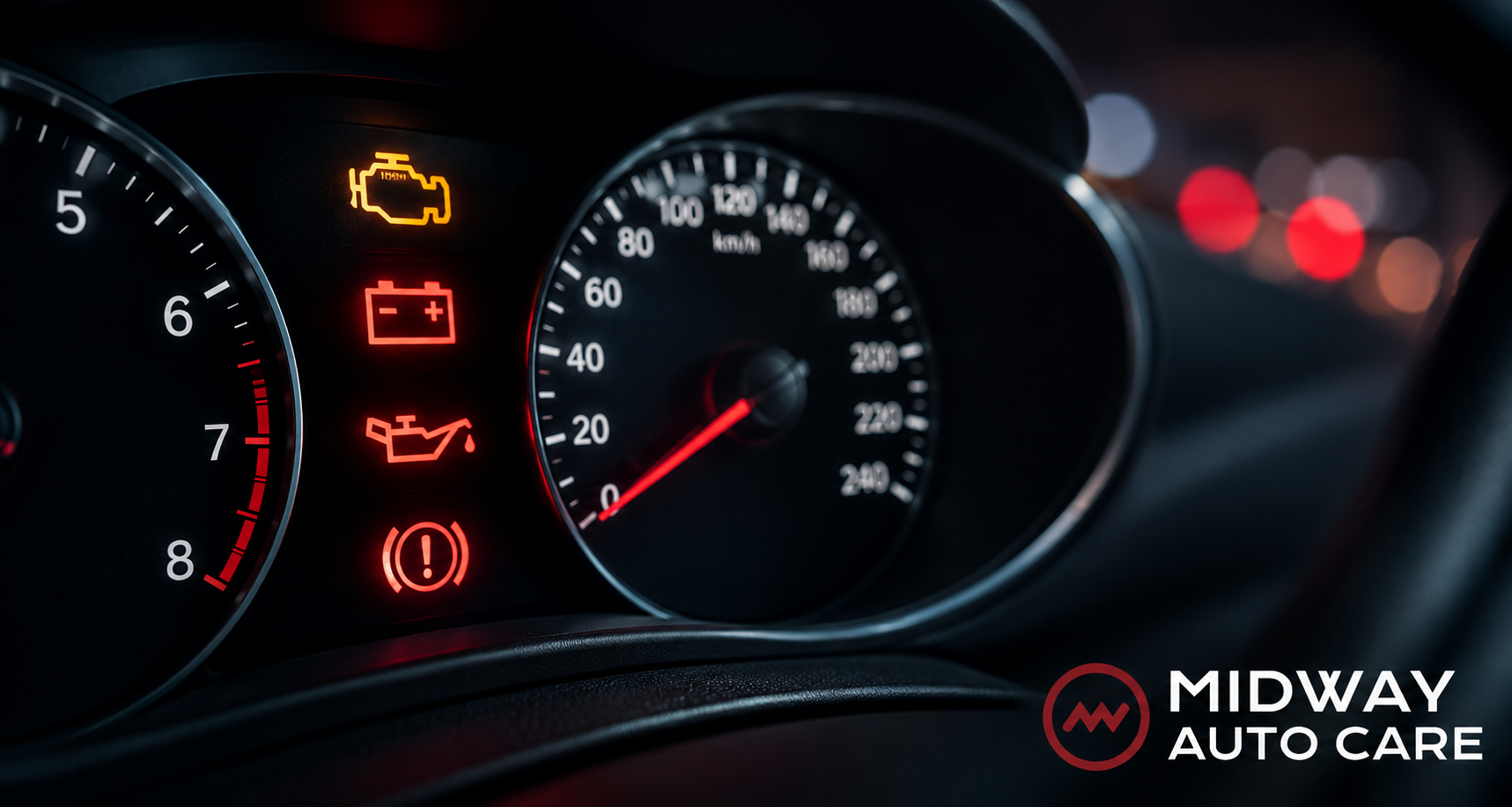
Over 80% of modern vehicles rely on internal sensors to monitor engine performance, and when something’s off, your dashboard alerts you. Your check engine light can signal anything from a loose gas cap to serious engine trouble. Understanding the most common causes helps you decide whether to act immediately or schedule a service. Key Takeaways: A check engine light can signal anything from a loose gas cap to serious engine trouble-diagnosing the specific issue requires a code reader or mechanic visit. Some problems, like a failing oxygen sensor or worn spark plugs, are common causes and can reduce fuel efficiency or increase emissions if ignored. While the light doesn’t always mean immediate danger, persistent or flashing warnings should prompt quick action to avoid costly repairs. Common Reasons Your Check Engine Light Is On Many check engine light activations stem from critical sensor malfunctions that directly impact your vehicle’s performance and emissions. These sensors monitor key engine functions, and when they fail, your car’s computer can’t adjust properly. You may notice reduced fuel economy, rough idling, or failed emissions tests. Ignoring these warnings can lead to more expensive repairs down the road. Oxygen Sensor (O2) Failure Your oxygen sensor measures the amount of unburned oxygen in the exhaust. When it fails, your engine runs too rich or too lean, hurting fuel efficiency and increasing emissions. You might smell sulfur or see a drop in gas mileage. Replacing a faulty O2 sensor often resolves the issue and restores proper engine function quickly. Mass Airflow (MAF) Sensor Issues A malfunctioning MAF sensor misreads the air entering the engine, throwing off the fuel mixture. You may experience hesitation during acceleration or difficulty starting the car. Dirt, debris, or a worn sensor often cause this problem. Cleaning or replacing the MAF sensor typically brings performance back to normal. Over time, the Mass Airflow sensor collects grime from unfiltered air, especially if your air filter is overdue for replacement. This buildup skews its readings, making the engine work harder than necessary. You’ll likely notice sluggish acceleration or stalling at idle. A technician can test the sensor’s output and determine whether it needs cleaning or a full replacement to restore accuracy. Emissions Control System Your car’s emissions control system helps reduce harmful pollutants released into the atmosphere. When the check engine light appears, this system may have detected an issue affecting your vehicle’s environmental performance. Problems can range from minor sensor glitches to more serious component failures, all of which impact emissions and fuel efficiency. Catalytic Converter Degradation A failing catalytic converter can’t efficiently convert toxic exhaust gases into less harmful substances. You might notice reduced engine performance or a sulfur-like smell from the exhaust. Left unaddressed, it can lead to higher emissions and potential failure during emissions testing. Evaporative Emission (EVAP) System Leaks An EVAP system leak allows fuel vapors to escape from the fuel system before they can be burned. This often triggers the check engine light without affecting drivability. Common causes include a loose or damaged gas cap or cracked hoses in the vapor recovery system. Small leaks in the EVAP system are among the most frequent reasons for a check engine light. Your vehicle’s computer monitors pressure in the fuel system and alerts you when it detects a drop. A smoke test at a repair shop can pinpoint the exact location of the leak, whether it’s at the gas cap, purge valve, or vent solenoid. Common Fuel System Issues Understanding what triggers your check engine light often leads to the fuel system, where small problems can create big headaches. A faulty component here affects performance and efficiency, so timely diagnosis matters. Loose or Damaged Gas Cap Leaving your gas cap loose is one of the simplest reasons for a check engine light. It can cause fuel vapor leaks and disrupt emissions control. Simply tightening or replacing it often resolves the issue within a few driving cycles. Fuel Injector Obstructions Debris or carbon buildup can restrict fuel injectors, leading to poor spray patterns and uneven fuel delivery. This often results in rough idling, reduced power, or increased emissions. Catching it early helps prevent long-term engine strain. Fuel injector obstructions develop over time as contaminants accumulate from fuel or engine byproducts. When injectors can’t deliver the right amount of fuel, your engine runs inefficiently. Professional cleaning or replacement may be necessary to restore optimal performance and fuel economy. Ignoring the problem can lead to misfires or catalytic converter damage. Understanding Warning Patterns Every time your check engine light activates, it communicates something specific about your vehicle’s health. The way it illuminates-steady or flashing-provides immediate clues about the urgency and nature of the issue. Recognizing these patterns helps you decide whether to keep driving or seek help right away. Solid vs. Flashing Indicators A steady light often signals a minor issue, like a loose gas cap or sensor malfunction. You’re usually safe to continue driving, but should schedule a diagnostic soon. A flashing light, however, means active engine damage-likely from a severe misfire. Stop driving and get your car checked immediately to avoid costly repairs. Interpreting OBD-II Diagnostic Codes Your car’s onboard computer stores trouble codes accessible through an OBD-II scanner. These codes, like P0301 or P0420, pinpoint specific system faults. While they don’t give full diagnoses, they guide technicians toward the root cause. You can read them yourself with an affordable scanner from an auto parts store. Each OBD-II code follows a standardized format that reveals which system is affected. The first letter indicates the category-P for powertrain, B for body, C for chassis, or U for network. The numbers that follow narrow down the circuit or component at fault. Knowing this helps you understand the issue before seeing a mechanic, saving time and avoiding unnecessary repairs. Finally! From above, you now know the check engine light often signals issues ranging from a loose gas cap to serious engine trouble. You should never ignore it. Your best move is to get a diagnostic scan to identify the exact cause. Addressing the problem early saves money and keeps your car running safely and efficiently. Check Engine Light On? Let Us Take a Look. A warning light doesn’t always mean a major repair—but the only way to know for sure is with a professional diagnostic scan. 📞 Call Midway Auto Care at (708) 294-8297 today and let our team identify the problem before it becomes an expensive repair. Serving Summit, IL and surrounding Chicago communities. FAQ Q: What does it mean when the check engine light comes on? A: The check engine light is part of your vehicle’s onboard diagnostics system. It turns on when the car’s computer detects a problem with the engine, emissions, or related systems. The issue could be minor, like a loose gas cap, or more serious, such as a failing catalytic converter. The light may appear steady or flash-if it’s flashing, that usually means there’s an urgent problem that needs immediate attention. Q: Can I keep driving if the check engine light is on? A: It depends on whether the light is steady or flashing. A steady light often means a non-emergency issue, so you can usually drive to a repair shop, but you shouldn’t ignore it. If the light is flashing, that signals a severe engine misfire, which can overheat the catalytic converter and cause expensive damage. In that case, reduce speed and get the vehicle checked as soon as possible, ideally within a few miles. Q: What are the most common reasons for the check engine light to turn on? A: Common causes include a loose or damaged gas cap, worn spark plugs or plug wires, a faulty oxygen sensor, a failing catalytic converter, or issues with the mass airflow sensor. Problems with the emissions system, such as a leak in the vacuum hose or EVAP system, also trigger the light. Many of these issues affect fuel efficiency, performance, or emissions, so diagnosing the exact cause with a scan tool is necessary. Q: How do mechanics find out what’s causing the check engine light? A: Mechanics use a diagnostic scan tool that connects to the vehicle’s OBD-II port, usually located under the dashboard near the steering column. The tool reads trouble codes stored in the car’s computer, which point to specific systems or components with issues. These codes don’t give a full diagnosis on their own, but they guide the technician to the right area for further inspection and testing. Q: Can the check engine light reset itself? A: Yes, the light can turn off by itself if the issue that triggered it resolves. For example, if a loose gas cap was the cause and you tighten it, the system may run tests over several driving cycles and turn the light off if no further problems are detected. However, even if the light goes off, it’s wise to have the vehicle checked, because some problems can come back or cause long-term damage even if the light isn’t on.
By Midway Auto Care May 21, 2026
Discover expert engine replacement and rebuild services in Summit, IL, with Midway Auto Care. Ensure peak performance for your car. Schedule an online appointment now.
By Midway Auto Care April 23, 2026
Trust Midway Auto Care in Summit, IL for superior brake services. Enhance safety with our expert advice. Visit us today for top-notch maintenance!
By Midway Auto Care March 26, 2026
Discover expert tips on oil changes at Midway Auto Care in Summit, IL. Enhance your engine's performance. Visit us today for a service that matters!
By Midway Auto Care February 27, 2026
Keep your car comfortable with expert A/C & Heat Service at Midway Auto Care in Summit, IL. Enhance performance and lifespan. Schedule an online appointment now.
By Midway Auto Care January 30, 2026
Discover expert transmission replacement at Midway Auto Care in Summit. Your trusted team for quality auto repair and maintenance. Schedule an appointment today!
By Midway Auto Care January 29, 2026
Seeking expert suspension repair in Summit, IL? Trust Midway Auto Care for reliable service. Ensure a smooth, safe ride today. Call us now!
By Midway Auto Care October 20, 2025
Discover expert engine replacement and rebuild services at Midway Auto Care in Summit, IL. Ensure peak vehicle performance. Visit us today!
By Midway Auto Care September 22, 2025
Discover expert brake service in Summit at Midway Auto Care. Ensure safety with our top-notch automotive expertise. Visit us today!
By Midway Auto Care August 25, 2025
Enhance your car's performance with expert oil changes in Summit at Midway Auto Care. Discover essential auto care tips. Call us today!
More Posts