How Often Should Brake Pads Be Replaced?
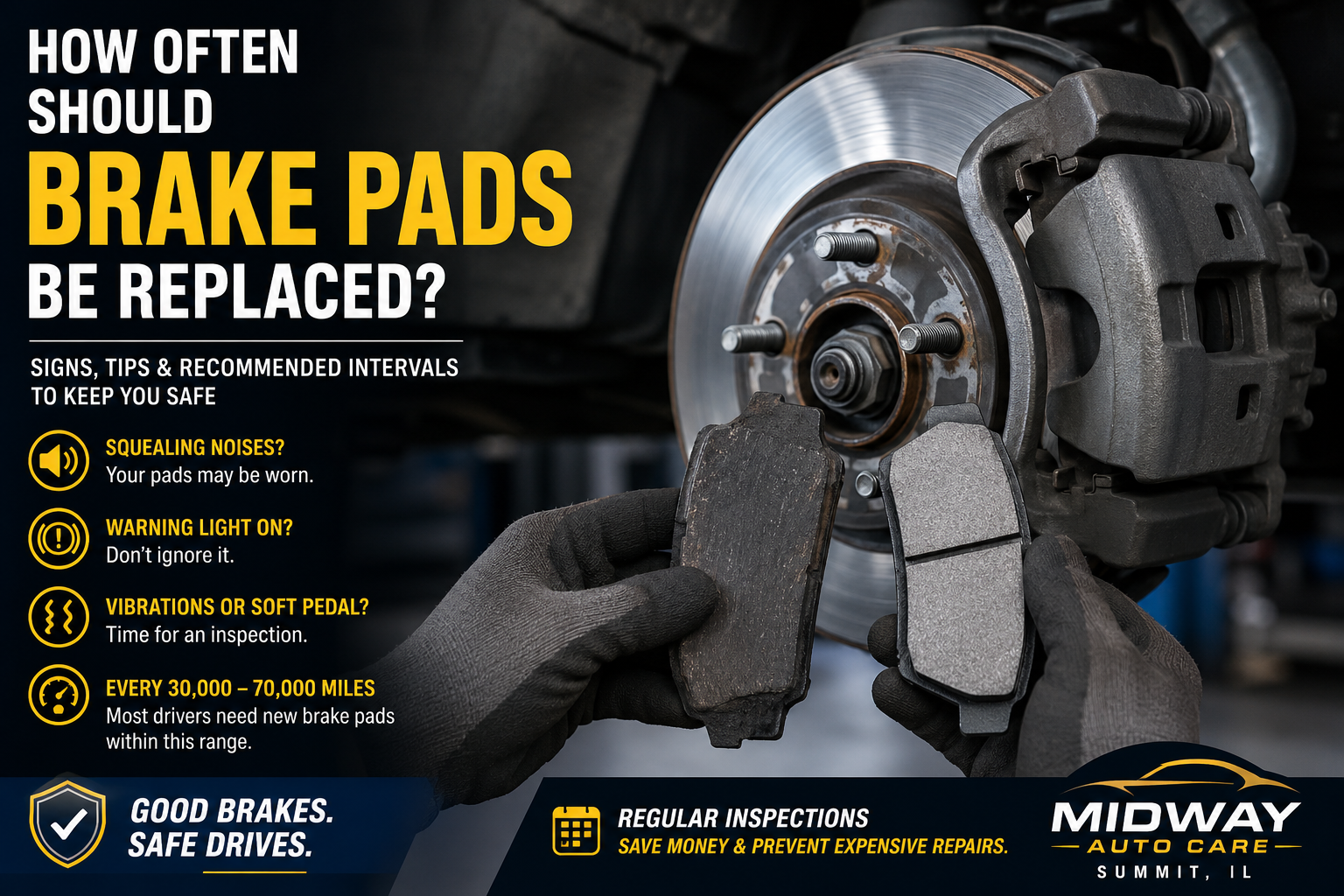
Your vehicle’s braking system is one of its most important safety features, and brake pads are the components that experience the most wear. A common question many drivers ask is “How often should brake pads be replaced?”
The answer depends on your driving habits, vehicle type, and the material of the brake pads. In general, most brake pads last between 30,000 and 70,000 miles, but some may wear out much sooner under heavy city driving or frequent towing.
Understanding the warning signs and following regular brake inspections can help you avoid expensive repairs while keeping your vehicle safe on the road.
Key Takeaways
- Most brake pads last between 30,000 and 70,000 miles.
- Driving style and road conditions greatly affect brake pad lifespan.
- Squealing or grinding noises should never be ignored.
- Regular brake inspections help prevent rotor damage and costly repairs.
- Replacing brake pads early is far less expensive than replacing the entire braking system.
How to Identify Critical Warning Signs of Brake Pad Wear
Your vehicle usually gives several warning signs before the brake pads completely wear out. Paying attention to these symptoms can save money and improve safety.
Squealing, Grinding, and Chirping Noises
A high-pitched squeal when pressing the brake pedal often means the brake pads are reaching the end of their service life. Many brake pads are designed with wear indicators that intentionally produce this sound.
Grinding or metallic noises are much more serious. They often indicate that the friction material has worn away and metal is contacting the brake rotor. Immediate service is recommended to avoid expensive damage.
Brake Pedal Vibrations or Reduced Responsiveness
If you notice vibrations while braking or your brake pedal feels softer than usual, your braking system should be inspected.
Warped rotors, uneven pad wear, or overheating can reduce stopping performance and increase braking distance, creating a safety risk.
How Often Should Brake Pads Be Replaced?
Brake pad lifespan depends largely on the material used.
Ceramic Brake Pads
- Typically last 50,000–70,000 miles
- Quiet operation
- Produce less brake dust
Semi-Metallic Brake Pads
- Usually last 30,000–50,000 miles
- Excellent stopping performance
- Durable under different driving conditions
Organic Brake Pads
- Usually last 20,000–35,000 miles
- Softer and quieter
- Wear faster than ceramic or semi-metallic options
Driving Habits Make a Big Difference
Even premium brake pads wear faster under certain conditions:
- Stop-and-go city traffic
- Frequent hard braking
- Mountain driving
- Heavy towing
- Carrying excessive loads
Drivers who spend most of their time on highways often enjoy significantly longer brake pad life than those who drive in urban traffic.
Regular Brake Inspections Can Save You Money
Many drivers wait until they hear grinding noises before scheduling service. Unfortunately, by that point the brake rotors may already be damaged.
Having your brakes inspected during routine maintenance allows small problems to be corrected before they become expensive repairs. In many cases, replacing brake pads early can prevent the need for rotor replacement.
If you’re in Summit, IL, or the surrounding Chicago area, a professional brake inspection can help determine whether your brake pads are simply worn or if additional brake service is needed.
Tips to Extend Brake Pad Life
You can increase the lifespan of your brake pads by following a few simple habits:
- Drive smoothly and avoid sudden braking
- Leave more distance between vehicles
- Coast whenever traffic conditions allow
- Use engine braking on long downhill roads when appropriate
- Keep brake fluid clean and properly maintained
- Schedule regular brake inspections
These habits not only reduce brake wear but also improve overall driving safety.
Is It Safe to Drive With Worn Brake Pads?
No. Driving with severely worn brake pads reduces stopping power and increases stopping distance. Once the friction material wears away, the metal backing plate contacts the brake rotor, causing damage that can significantly increase repair costs.
Replacing brake pads before they become excessively worn protects both your vehicle and your safety.
Do Front and Rear Brake Pads Wear at the Same Rate?
Not usually. Front brake pads typically wear faster because most of the vehicle’s weight shifts toward the front during braking. For this reason, technicians inspect all four brakes but often replace the front pads sooner than the rear pads.
Final Thoughts
Knowing how often brake pads should be replaced helps you maintain your vehicle safely and avoid unnecessary repair expenses.
Although most brake pads last between 30,000 and 70,000 miles, mileage alone should never determine replacement. Listening for unusual noises, paying attention to braking performance, and scheduling regular inspections are the best ways to keep your braking system operating properly.
Need Your Brakes Checked?
If you’re hearing squealing, grinding, or noticing reduced braking performance, don’t wait until a simple brake pad replacement becomes a much larger repair.
The experienced technicians at Midway Auto Care can inspect your braking system and recommend the service your vehicle actually needs.
📞 Call Midway Auto Care today at (708) 294-8297 to schedule your brake inspection.
Frequently Asked Questions
How often should brake pads be replaced?
Most brake pads should be replaced every 30,000 to 70,000 miles, depending on driving habits, vehicle type, and brake pad material.
What are the signs that brake pads need replacement?
Common warning signs include:
- Squealing noises
- Grinding sounds
- Vibrations while braking
- Reduced stopping power
- Brake warning lights
Can driving style affect brake pad life?
Yes. Frequent hard braking, stop-and-go traffic, mountain driving, and towing heavy loads can significantly shorten brake pad lifespan.
Do front brake pads wear faster than rear brake pads?
Yes. Front brake pads typically wear faster because they handle more braking force during normal driving.
Is it safe to drive with worn brake pads?
No. Worn brake pads can reduce stopping performance and damage brake rotors, leading to more expensive repairs and increased safety risks.